Range Trading: A 2026 Overview of Sideways Markets
Markets do not trend all the time. Many periods are defined by consolidation, where price moves between clear highs and lows. Range Trading Strategy 2026 focuses on these conditions and helps traders operate when momentum is limited.
On VPtrade, traders can apply range-based strategies across forex, indices, stocks trading, and commodities, making it a flexible approach across multiple markets.
Disclaimer: This article is for educational purposes only, does not provide investment advice, and trading decisions should be based on your own research and risk tolerance.
What Defines a Range Market
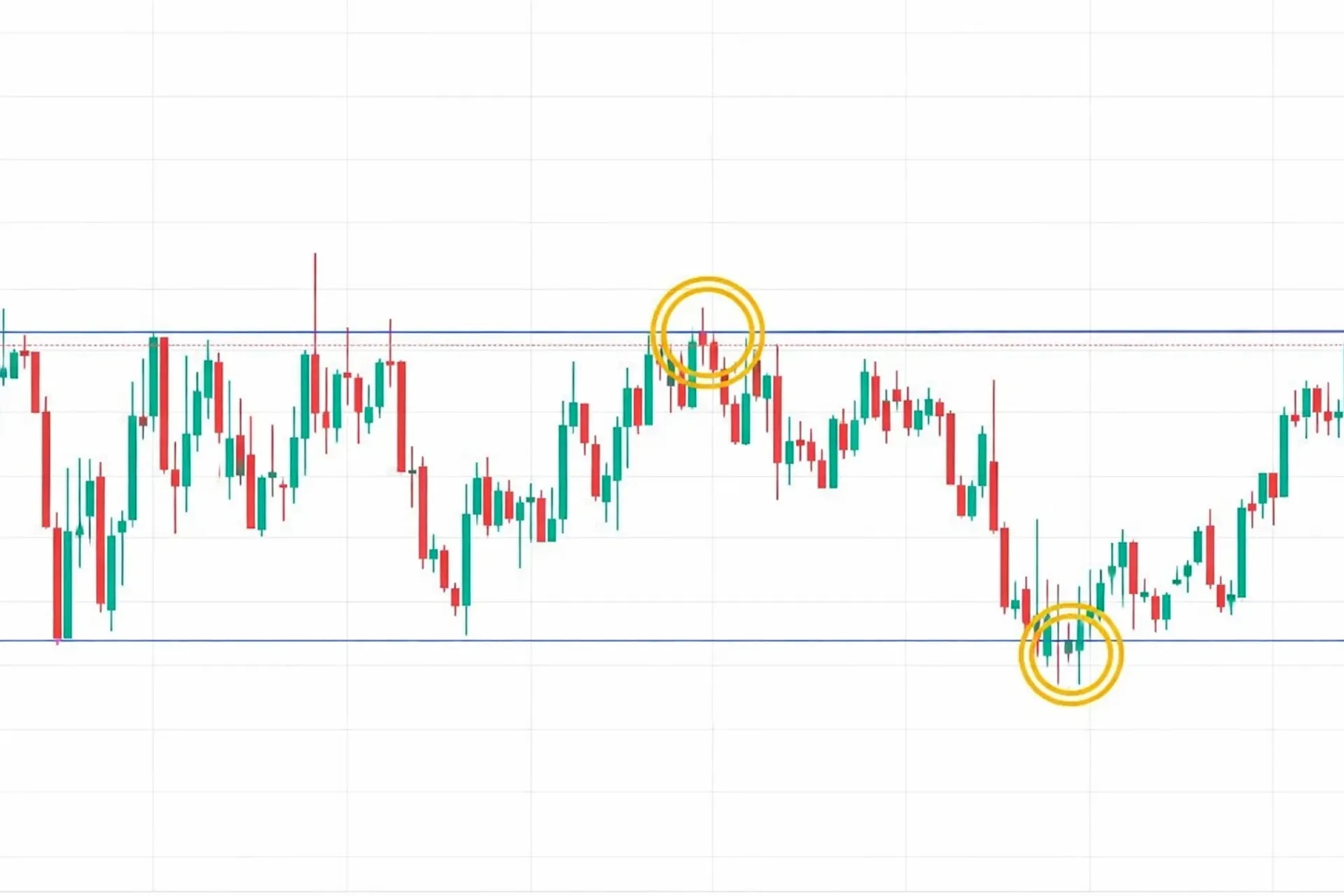
A range market forms when the price moves between support and resistance without establishing a clear trend. Buyers tend to step in near the lower boundary, while sellers appear near the upper boundary, creating repeated reactions.
These conditions are common during low volatility periods or before major economic events. Traders often confirm ranging conditions using insights from latest market trends and tools available in the economic calendar.
Key characteristics of a range market include:
- Price repeatedly tests similar high and low zones
- Lack of strong directional movement
- Lower volatility compared to trending phases
- Frequent reversals within defined boundaries
- Reduced follow-through after breakouts
Recognizing these signs early helps traders avoid trend strategies that are less effective in sideways markets and instead apply more suitable methods.
Note: Range conditions require a different mindset than trending markets.
Why Range Trading Matters
Range trading offers opportunities in conditions where many traders struggle. Instead of waiting for trends, traders focus on repeated reactions between support and resistance levels.
On VPtrade, this approach can be applied alongside insights from stock trading online tips and forex trading market tips, helping traders adapt to different environments.
Range trading also supports better discipline. Since boundaries are clearly defined, traders can structure entries and exits more consistently without chasing price movement.
The main benefits of range trading include:
- Clear entry and exit zones
- Reduced reliance on strong trends
- Structured trade planning
- Better control over risk placement
- Consistent repeatable setups
This makes it especially useful for beginner to intermediate traders who want a clear framework instead of reacting emotionally to every price move.
How to Identify Strong Range Levels
Identifying a valid range is the most important step. Weak ranges often break unexpectedly, while strong ranges show repeated and consistent reactions at both boundaries.
Traders often analyze historical price behavior and combine it with tools discussed in online trading for beginners, and how to choose the best financial markets to improve accuracy.
To identify a strong range, follow this process:
- Mark clear support and resistance zones
- Look for at least two to three consistent touches
- Check if the price respects boundaries over time
- Avoid ranges during major news events
- Confirm with stable volatility conditions
This approach reduces false assumptions and helps traders focus on higher-quality setups that align with actual market behavior.
Tip: Strong ranges often show multiple clean reactions before breaking.
Range Trading Setup Examples
Once a range is confirmed, traders typically look for opportunities near the boundaries. Buying near support and selling near resistance are the most common approaches in these conditions.
However, entries should not rely on price level alone. Traders often use confirmation techniques discussed in day trading mastery and top MT4 indicators to refine timing.
Range trading is often described in educational materials as a way to examine how price behaves within defined boundaries:
- Price is commonly observed near support and resistance zones
- Price behavior and indicators are sometimes discussed for additional context
- Range boundaries are used to illustrate how price may fluctuate within a confined area
- Movement between opposing sides of the range is often highlighted
- Mid-range areas are sometimes associated with less directional clarity
This structure helps traders maintain discipline and avoid low-probability trades that occur away from key levels.
Range Market Behavior – Full Breakdown
Understanding how price behaves inside a range improves consistency. The table below outlines common range conditions and how traders typically respond within those scenarios.
The following table provides an overview of how price behavior within ranges is commonly described in educational materials:
| Condition | Price Behavior | How It Is Commonly Interpreted | Observational Notes | Related Learning |
| Near support | Price stabilizes or reverses | Often associated with potential support reactions | May involve the slowing or pausing of the downward movement | Commodity trading basics |
| Near resistance | Price slows or rejects | Often linked to resistance reactions | May coincide with reduced upward momentum | Stock market fundamentals |
| Mid range | Unclear direction | Associated with neutral or balanced conditions | Often reflects limited directional bias | Online trading basics |
| Breakout attempt | Increased volatility | Sometimes discussed in the context of level breaks | May involve expanding price movement | Market volatility |
| False breakout | Quick reversal | Linked to failed moves beyond key levels | May return to prior range conditions | Trading risks |
This structure helps traders avoid overtrading and stay focused on high probability zones within the range.
Warning: False breakouts are common in range markets and require patience.
Combining Range Trading With Other Tools
Range trading improves when combined with additional analysis. Traders often use indicators and market context to confirm whether a level is likely to hold or break.
On VPtrade, tools available through the platform and education center support this process, helping traders refine timing and execution.
Combining range trading with other tools improves results:
- Use support and resistance with confirmation signals
- Monitor volatility changes across sessions
- Align trades with broader market conditions
- Check upcoming economic events
- Use indicators to refine entry timing
This layered approach helps traders avoid relying on a single factor and improves overall decision-making.
Conclusion
Range markets offer structured opportunities for traders who understand how to operate within boundaries. Instead of waiting for trends, traders can focus on repeated reactions between support and resistance.
With practice and discipline, Range Trading Strategy 2026 becomes a reliable approach for navigating sideways markets on VPtrade, supporting consistent and structured decision-making.
FAQ
What is range trading?
Range trading involves buying near support and selling near resistance within a sideways market where price moves between defined boundaries.
Is range trading suitable for beginners?
Yes, it provides a clear structure and defined levels, making it easier for beginners to understand entry and exit zones.
How do I confirm a range market?
Look for repeated reactions at support and resistance levels and a lack of strong directional movement.
What is the biggest risk in range trading?
False breakouts can lead to losses if traders enter too early without confirmation.
Can range trading be used on VPtrade?
Yes, it can be applied across forex, stocks, indices, commodities, and other markets available on the platform.